
Article
The LinkedIn strategy every exhibitor should use before and after shows
Pre-show connection requests, booth-day posts, and post-show follow-up on LinkedIn — a B2B exhibitor playbook tied to your show calendar.
Article
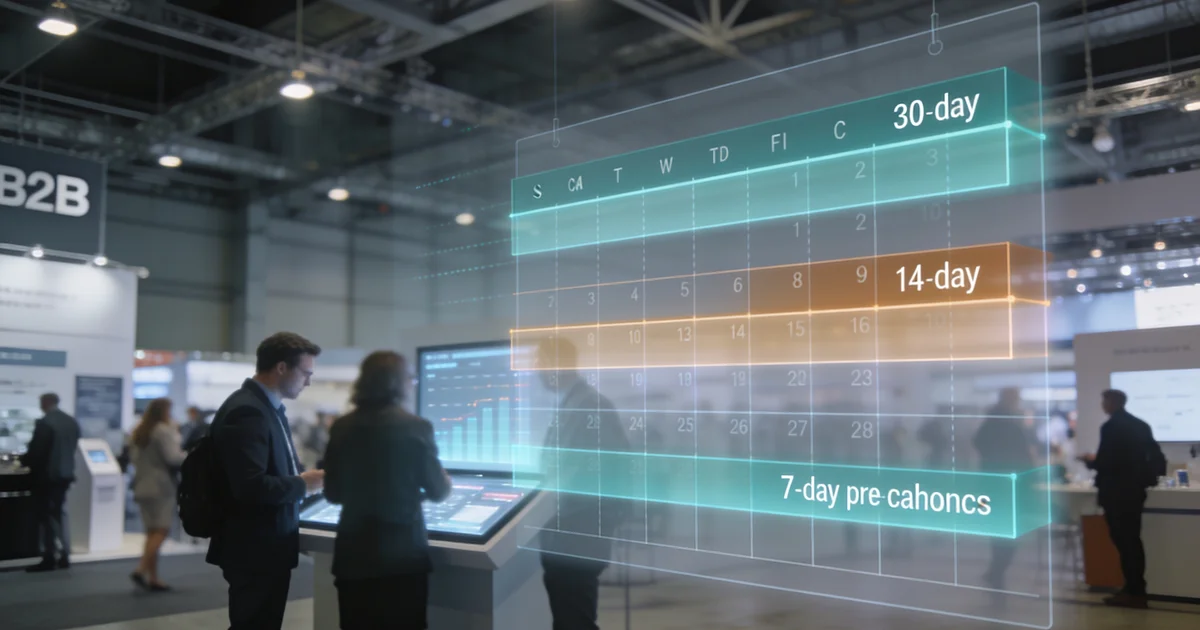
Short answer: Run LinkedIn on a 30/14/7-day pre-show cadence — problem post, demo preview, then booth number with two meeting windows — scale connection requests and commenting hours by show tier, split founder posts (reach) from company posts (brand), comment thoughtfully on attendee posts during show week, and follow up post-show with tier-specific DMs (hot same day, warm within 24 hours). Never blast generic booth invites to your entire network.
When I audit exhibitor social playbooks after major B2B fairs, LinkedIn is rarely missing from the plan — it is misused. Teams schedule one company-page graphic the week before move-in, spray connection requests with no hook, then wonder why foot traffic stayed cold. This guide is the cadence I assign before anyone opens Canva: day-by-day pre-show posting, connection scripts, booth-day founder vs company split, attendee commenting, post-show DMs, and the anti-patterns that waste show spend. Pair it with pre-show meeting booking from our booth traffic guide and post-show timing from our follow-up timeline — LinkedIn is the connective tissue between them.
Scale LinkedIn effort by show tier first
LinkedIn hours are finite. I see teams run the same posting calendar for a Tier A flagship and a Tier C test fair — then blame the channel when the test show underperforms. Score your calendar on our Tier A/B/C budget framework and shortlist fairs on ExhibitionsVoice before you assign quotas:
- Tier A flagships — full 30/14/7 cadence, 40–60 targeted connection requests across sales, daily commenting block during show week, founder + company posts each hall day
- Tier B regional shows — 14/7 cadence only, 20–35 connection requests, founder posts on days 1–2, company reshare on day 1
- Tier C tests — one founder save-the-date at 7 days, 10–15 connection requests to validate ICP density, no company-page campaign until the fair earns rebook
Tiering prevents the most expensive LinkedIn mistake: burning executive credibility on a fair that never matched your buyer profile. If show selection was wrong, no connection script saves the booth — fix the calendar before you optimize posts.
30/14/7-day pre-show LinkedIn cadence
Three windows, three jobs. Print this on the show brief next to your outreach quota:
| Window | Founder account | Company page | Sales team |
|---|---|---|---|
| 30 days out | Problem post — the pain you will demo on the floor, not booth graphics | Reshare official show listing with one-line ICP hook | Begin Tier A/B connection wave to ICP accounts (see scripts below) |
| 14 days out | Demo preview — 60-second clip or carousel of the live workflow | Partner co-marketing tag if applicable | Book-a-slot DMs to warm CRM accounts with two time windows |
| 7 days out | Booth number + aisle landmark + two meeting slots | Staff intro carousel — faces, not logos | Final connection wave; start commenting on attendee travel posts |
Each post needs one concrete reason to stop — the same standard we use for aisle conversation in our conversation starters guide. "Visit us at booth 1234" is not a reason; "we run your compliance workflow live in 90 seconds" is.
Assign a named owner per row in the table. Marketing often owns company page; founders own their account; sales owns connections and DMs. Unowned calendars default to zero posts at 14 days — the week when buyers actually plan their hall routes.
Connection request scripts that earn replies
Connection requests fail when they read like mail merge. Keep under 300 characters and reference one booth outcome. Three scripts I see work across sectors:
Cold ICP: "Running [specific use case] live at [show] [date] — worth a 15-min stop if [pain point] is on your 2026 roadmap. Happy to hold a slot."
Warm CRM: "Saw you're attending [show] — we're demoing [outcome] at [booth]. I held [Tuesday 2pm / Thursday 10am] if you want a walkthrough before the aisle rush."
Mutual connection: "[Name] suggested we connect before [show] — we're showing [workflow] live. Open to a quick floor meeting if your eval timeline fits."
Send from the rep who will stand on the aisle, not marketing automation. Personal accounts outperform company pages for acceptance rate on cold ICP. When they accept, the floor handoff should continue the same hook — not restart with a generic pitch. Train closers with our conversation-to-meeting scripts so LinkedIn outreach and booth close use one narrative.
Booth-day posting: founder vs company page
Show week is not the time for a single scheduled graphic. Split roles so buyers see people and proof:
- Founder — morning of hall open: Short doors-open post with booth number, aisle landmark, and one demo time today. First-person, no corporate filler.
- Founder — midday: One proof moment — photo of a live demo, a buyer quote (with permission), or a 30-second clip of the workflow running. Tag the official show hashtag once, not five times.
- Company page — day 1: Staff carousel: who is on the aisle, what they demo, how to book 15 minutes.
- Company page — mid-show: Partner or customer reshare if co-marketing was part of your pre-show plan.
B2B buyers follow founders and domain experts more than logo pages. I track meeting sources after Tier A shows — founder posts consistently outperform company-only calendars for inbound booth requests. Company page still matters for brand search and HR recruits, but pipeline meetings come from people.
Do not live-post every hour. Two founder touches per day and one company touch across three hall days is enough when connection requests and DMs did their job pre-show.
Commenting on attendee posts during show week
The highest-ROI LinkedIn tactic I see underused: thoughtful comments on attendee posts — travel day, arrival, session takeaways — without pitching in the thread.
Rules I enforce:
- 15-minute daily block — sales searches the show hashtag and attendee check-ins; marketing does not own this alone
- Add value first — react to their session insight or ask one genuine question; never lead with booth number
- Warm accounts get a DM after a good comment — "saw your post on [topic] — we're digging into that at booth [X] Tuesday afternoon if useful"
- Cold accounts stay in comments only — build familiarity; save the pitch for the aisle or a post-show DM if you actually spoke
Commenting warms accounts that ignored connection requests. It also surfaces who is actually on-site versus who registered and stayed home — useful intelligence for Tier C rebook decisions.
Post-show LinkedIn DM follow-up by tier
LinkedIn is not a substitute for the day 0–14 follow-up calendar — it is an alternate channel when email stalls. Match DMs to tier:
| Tier | LinkedIn action | Timing |
|---|---|---|
| Hot | DM from the AE who spoke — reference booth hook, offer two meeting times | Same show day or within 4 hours of conversation |
| Warm | Connect if not already; send promised asset in DM with soft 15-min CTA | Within 24 hours |
| Cold | No mass DM — route to marketing nurture on day 2 per follow-up timeline | Day 2+ automation only if they engage |
Hot DMs should mirror the close language from our sales meeting guide — two specific times, not "let's connect." Warm DMs carry the asset you promised on the floor. Cold scans never receive a copy-paste "great meeting you" blast; that trains buyers to ignore you at the next fair.
What not to do on LinkedIn around trade shows
Anti-patterns I flag in exhibitor audits — each one burns reach or credibility:
- Generic booth blast — one graphic sent to the entire network with no ICP filter or demo hook
- Connection spray — 200 requests in 48 hours with empty notes; LinkedIn throttles and buyers notice
- Hashtag stuffing — five event tags and ten industry tags on every post; reads spam, not signal
- Company-page-only — no founder or AE voice during the highest-attention week of your calendar
- Pitching in comment threads — "visit booth 1234!" on someone's travel post; instant reputation damage
- Post-show DM blast to every scan — same message to 400 badge swipes; duplicates the email spam buyers already deleted
One disciplined calendar beats ten reactive posts. If you only fix one habit: stop the generic blast and replace it with tier-scaled connection requests that name a booth outcome.
Pre-show LinkedIn checklist (add to show brief)
- Confirm show tier; set connection and post quotas accordingly
- Load 30/14/7 posts into calendar with named owners (founder, company, sales)
- Pre-write three connection scripts with show-specific hooks filled in
- Block 15-minute daily commenting slots for show week on sales calendars
- Align post-show DM rules with CRM tier tags and follow-up timeline owners
LinkedIn works when it is scheduled like outreach, not sprinkled like brand awareness. Tie every action to a meeting or a conversation — the same bar we set for aisle time.
FAQ
What should exhibitors post on LinkedIn before a trade show?
Run a 30/14/7-day cadence: 30 days out post the problem you will demo, 14 days share a preview clip, 7 days publish booth number with two bookable meeting windows. Scale post count by show tier — Tier A gets the full calendar, Tier C gets one founder post and targeted DMs only.
How do you write a LinkedIn connection request for a trade show?
Reference one specific booth outcome — a live demo, a use case, or a named session — not just booth number. Keep under 300 characters. Example: "Running [use case] live at [show] next week — worth a 15-min stop if [pain] is on your roadmap."
Should founders or company pages post during trade show week?
Both, with different jobs: founders post morning doors-open and midday demo moments for reach; company page posts staff intros and partner reshares. B2B buyers follow people more than logos — founder posts drive meetings, company posts support brand search.
How do you follow up on LinkedIn after a trade show?
Hot leads: same-day DM referencing the booth conversation hook. Warm: connect within 24 hours with the promised asset. Cold: no mass DM blast — route to marketing nurture per the day 2 cold timeline. Never copy-paste the same message to every scan.
What LinkedIn mistakes do exhibitors make at trade shows?
Generic "visit booth 1234" blasts, mass connection requests with no personalization, company-page-only posting, pitching in comment threads, and post-show DM spam to every badge scan. Each wastes the show investment without booking meetings.
How many LinkedIn connection requests should exhibitors send before a show?
Tier A: 40–60 targeted ICP requests across the sales team. Tier B: 20–35. Tier C: 10–15 to validate the fair. Quality and booth-outcome hooks matter more than volume — spray-and-pray requests get ignored and can flag your accounts.
Scale LinkedIn effort by show tier
Tier A/B/C quotas for connection requests, posts, and commenting hours — align with show budget framework before building the calendar.
30/14/7-day pre-show LinkedIn cadence
| Window | Founder | Company page | Sales team |
|---|---|---|---|
| 30 days | Problem post + save-the-date | Event listing reshare | ICP connection requests (tier quota) |
| 14 days | Demo preview clip or carousel | Partner co-marketing tag | Book-a-slot DMs to warm accounts |
| 7 days | Booth number + two meeting windows | Staff intro carousel | Final connection wave + comment on attendee posts |
Connection request scripts
Three scripts: cold ICP, warm CRM, mutual connection — each references one booth outcome, not booth number alone. Pair with conversation starters for floor handoff.
Booth-day posting: founder vs company
Founder: morning doors-open + midday demo moment. Company: staff carousel + partner reshare. Tie to pre-show traffic tactics.
Commenting on attendee posts
15-minute daily commenting block — add value on attendee travel/arrival posts, never pitch in comments. Warm accounts get a thoughtful reply, not a booth link.
Post-show LinkedIn DM follow-up
Hot: DM same day referencing booth hook. Warm: connect + asset within 24h. Cold: no mass DM — see follow-up timeline. Meeting close scripts in sales meetings guide.
What not to do
Generic booth blast, mass connection spray, hashtag stuffing, company-page-only posting, post-show copy-paste DMs to every scan.
Common exhibitor questions
What should exhibitors post on LinkedIn before a trade show?
Run a 30/14/7-day cadence: 30 days out post the problem you will demo, 14 days share a preview clip, 7 days publish booth number with two bookable meeting windows. Scale post count by show tier — Tier A gets the full calendar, Tier C gets one founder post and targeted DMs only.
How do you write a LinkedIn connection request for a trade show?
Reference one specific booth outcome — a live demo, a use case, or a named session — not just booth number. Keep under 300 characters. Example: 'Running [use case] live at [show] next week — worth a 15-min stop if [pain] is on your roadmap.'
Should founders or company pages post during trade show week?
Both, with different jobs: founders post morning doors-open and midday demo moments for reach; company page posts staff intros and partner reshares. B2B buyers follow people more than logos — founder posts drive meetings, company posts support brand search.
How do you follow up on LinkedIn after a trade show?
Hot leads: same-day DM referencing the booth conversation hook. Warm: connect within 24 hours with the promised asset. Cold: no mass DM blast — route to marketing nurture per the day 2 cold timeline. Never copy-paste the same message to every scan.
What LinkedIn mistakes do exhibitors make at trade shows?
Generic 'visit booth 1234' blasts, mass connection requests with no personalization, company-page-only posting, pitching in comment threads, and post-show DM spam to every badge scan. Each wastes the show investment without booking meetings.
How many LinkedIn connection requests should exhibitors send before a show?
Tier A: 40–60 targeted ICP requests across the sales team. Tier B: 20–35. Tier C: 10–15 to validate the fair. Quality and booth-outcome hooks matter more than volume — spray-and-pray requests get ignored and can flag your accounts.
Editorial standards & corrections
This guide is maintained by the ExhibitionsVoice editorial team. We cross-check dates, venues, and organizer names against official sources before listing events. Spot an error? Use our contact form with the event URL and corrected details — every correction request is read by editorial.
Read more: About ExhibitionsVoice · FAQs · All exhibitor guides
Related articles
Oil and gas trade shows 2026: energy calendar and how to pick
Oil and gas trade shows for 2026 — ADIPEC, WETEX, and offshore energy fairs we score for NOC, IOC, and energy-tech exhibitors.
CPHI India 2026 exhibitor guide: Delhi pharma ingredients floor
CPHI India 2026 exhibitor guide for 23-25 November at IICC Yashobhoomi, New Delhi — API, CDMO, and packaging teams scoring South Asia's ingredients floor.
Fintech trade shows 2026: payments calendar and how to pick
Fintech and payments trade shows for 2026 — Money20/20 USA, Sibos, and how banks and vendors pick Tier A/B/C money-ecosystem floors.
ADIPEC 2026 exhibitor guide: Abu Dhabi energy floor
ADIPEC 2026 exhibitor guide for 2-5 November at ADNEC Centre Abu Dhabi — who should exhibit, hall logistics, and how we score the energy floor.