
Article
Trade show booth design guide: brief, budget, and vendor selection (2026)
A commercial booth design playbook: what to put in the creative brief, what design should cost by footprint, and how we evaluate agencies for 2026 shows.

Article
Short answer: Trade show booth design is the process of turning a booked exhibit space into a visitor path, message hierarchy, demo environment, and sales handoff. For 2026, strong booth design starts with the show audience and commercial goal, then defines layout, graphics, lighting, product proof, staffing, and follow-up. A pretty render is not a strategy; the booth has to make the right buyer stop, understand, and take the next step.
I have a simple rule for booth design: never approve a render until you can explain the visitor's first 30 seconds. Where do they see the headline? What tells them the booth is relevant? What do they touch or watch? Who greets them? What happens after the badge scan? If those answers are vague, the design is not ready, even if the rendering looks expensive. If those answers are clear, the design team can make better choices about structure, graphics, and budget.
Start with the buyer path
Most design projects start with size, colors, and inspiration images. I start with the buyer path. A visitor moves from aisle scan to stop decision to conversation to qualification to next step. Booth design should remove friction at each stage.
At aisle scan, the headline and visual proof must make the category obvious. At the stop decision, the booth needs an open entry and a reason to step closer. During conversation, staff need room to qualify without blocking traffic. At the next step, lead capture must identify whether the visitor needs a demo, quote, distributor conversation, sample, trial, or nurture. Design is not finished until that path is usable.
That is why I connect this topic to our visitor-intent booth design guide. This article is broader: it covers the commercial brief, budget, and vendor selection. The other guide is more tactical on how to shape a booth people actually enter.
Write the booth design brief before asking for concepts
A booth design brief should be shorter than a brand book and sharper than a mood board. It should tell the designer what business outcome the space has to support. I include the following sections in every serious brief:
- Event context: Show name, dates, city, venue, hall, booth number, size, open sides, organizer manual, and deadlines.
- Audience: Buyer roles, verticals, account tiers, current objections, and expected traffic quality.
- Goal: Pipeline meetings, product launch, channel recruitment, distributor appointments, investor conversations, or brand visibility.
- Primary message: One buyer outcome, one supporting proof point, and any claims that must be legally reviewed.
- Demo needs: Screens, samples, machines, power, water, safety, sound, internet, storage, and reset time.
- Staffing: Headcount by hour, greeter positions, demo roles, meeting areas, and break coverage.
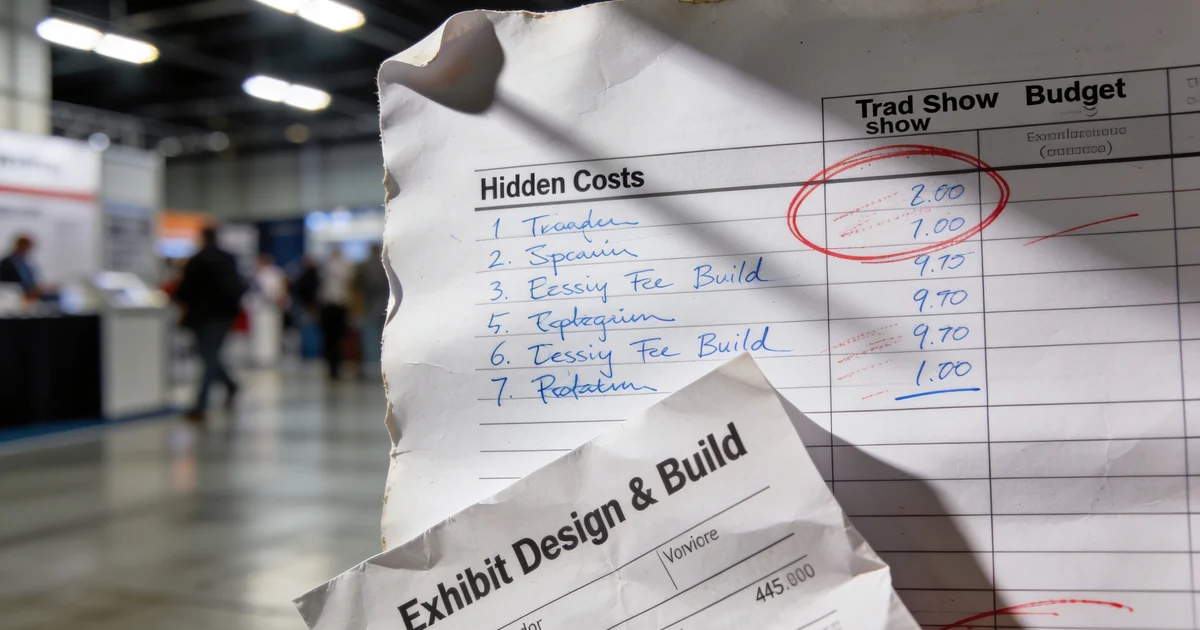
- Budget boundary: Separate design, build, show services, travel, lead capture, and post-show follow-up.
If the brief cannot explain why this show deserves spend, pause and use our guide to choosing trade shows on a B2B budget. A booth design project should not rescue poor event selection.
Budget bands by booth design complexity
CEIR has reported that booth space can represent roughly 25-35% of total exhibiting budget. That leaves a large share for design, fabrication, freight, material handling, labor, travel, lead tools, sponsorship, and follow-up. I prefer to plan booth design as a percentage of the full event investment, not as an isolated creative purchase.
| Booth type | Design approach | Typical 2026 planning posture | Best use |
|---|---|---|---|
| 10x10 inline | Portable or modular display, simple lighting, one demo point | Lean to moderate | Testing a show, regional calendar, focused product story |
| 10x20 inline | Modular wall, two zones, storage, stronger graphics | Moderate | Repeat shows and more product proof |
| 20x20 island | Multi-side flow, demo stations, meeting zone, overhead identity if allowed | Moderate to high | Category presence and active pipeline creation |
| Large custom island | Custom architecture, multiple demos, private meetings, hospitality | High | Flagship launches, enterprise accounts, channel ecosystems |
For detailed line items, compare the exhibiting cost guide with the average booth cost breakdown. If ownership is the question, rent or buy your trade show booth gives the cleaner decision model.
Design principles that improve booth performance
One message wins the aisle
Visitors do not read a booth like a webpage. They scan it while moving, often with noise, bags, coffee, and competing appointments. The top message should state a buyer outcome in plain language. Your logo matters, but it should support the message rather than replace it.
Open edges invite qualified stops
Blocking the aisle with counters, literature racks, and staff bodies turns the booth into a barrier. Open edges make it easier for a visitor to step in, ask one question, and leave if there is no fit. That is good design. The goal is qualified movement, not trapping people.
Demo motion beats static claims
A working screen loop, physical sample, comparison station, or live product output gives the visitor proof before a rep speaks. The demo does not have to be complex. It has to be visible and aligned with the headline.
Lighting is part of communication
General hall lighting can flatten even good graphics. Focus light on the message, hero product, or demo station. Bad lighting makes a premium build look unfinished; good lighting makes a modest booth easier to read.
Staffing is a design constraint
A booth drawn for eight staff but operated by three will fail. A design with one narrow entry will collapse if the greeter stands in the wrong place. Include headcount and staff choreography in the design brief, not after move-in.
How to evaluate booth design vendors
Booth design agencies, exhibit houses, fabricators, and rental suppliers can all produce attractive visuals. I evaluate them on operational answers, not only portfolio quality. Ask how they handle venue rules, approvals, engineering, freight, installation, dismantle, storage, damage, graphic reprints, and last-minute service changes. Ask which parts are custom, rented, or reused. Ask who owns the files and assets after the show.
Most importantly, ask them to explain the visitor path in their concept. If the answer is "people enter here and talk to staff," push harder. Where does the visitor stop? What proof is visible before conversation? What happens during peak traffic? What should staff do when two prospects arrive at once? Good vendors welcome these questions because they protect the result.
If you are sourcing events before sourcing vendors, use the trade show directory and relevant country or sector hubs to build the calendar first. If you sell design, build, or event services to exhibitors, our media pack explains how to reach this audience before they request quotes.
Booth design mistakes I would fix first
- Logo-first walls: The brand is visible, but the buyer outcome is not.
- Too much text: Paragraphs belong in follow-up material, not the backwall.
- Hidden demos: Screens face inward and create no reason to stop from the aisle.
- Furniture barriers: Counters and tables block the exact entry path you need visitors to use.
- Unplanned lead capture: Badge scans are collected without role, pain, urgency, or next action.
- Budget imbalance: Finish upgrades consume money needed for meetings, staffing, and post-event follow-up.
Fixing those issues usually beats adding another premium material. A booth should look credible, but credibility comes from clarity and proof as much as from finishes.
FAQ
What is trade show booth design?
Trade show booth design is the planning of the exhibit layout, structure, graphics, lighting, demo areas, staff flow, and lead handoff inside a booked booth space. It connects creative presentation to visitor behavior and sales goals.
How much does trade show booth design cost?
Cost depends on footprint, display type, custom fabrication, rental elements, graphics, show services, freight, labor, travel, and reuse. A 10x10 portable booth may be lean, while large custom islands can reach six figures all-in.
What should be in a booth design brief?
Include event details, booth size, audience, commercial goal, primary message, product or demo needs, staff plan, budget boundary, venue rules, deadlines, and expected follow-up workflow.
How do I choose a booth design company?
Review completed projects, not only renders. Ask about venue experience, approvals, freight, installation, dismantle, storage, asset ownership, damage handling, and how the concept supports the visitor path.
What makes a booth design effective?
Effective booth design is readable from the aisle, easy to enter, specific in its buyer promise, strong in visible proof, realistic for staff to operate, and connected to a follow-up process after the show.
Should I design my booth before choosing the trade show?
No. Choose the right event first, then design for that audience, venue, footprint, and traffic pattern. Otherwise you risk building an impressive booth for the wrong buyers.
Start with the buyer path
Editorial coverage for trade show booth design — practical criteria, budget context, and directory-backed planning for 2026 exhibitors. See the full article body for tables and FAQs.
Write the booth design brief before asking for concepts
Editorial coverage for trade show booth design — practical criteria, budget context, and directory-backed planning for 2026 exhibitors. See the full article body for tables and FAQs.
Budget bands by booth design complexity
Editorial coverage for trade show booth design — practical criteria, budget context, and directory-backed planning for 2026 exhibitors. See the full article body for tables and FAQs.
Design principles that improve booth performance
Editorial coverage for trade show booth design — practical criteria, budget context, and directory-backed planning for 2026 exhibitors. See the full article body for tables and FAQs.
Common exhibitor questions
What should I budget for trade show booth design?
Budget depends on footprint, show tier, and whether you rent, buy portable, or commission custom. Use our all-in exhibit cost guide and booth cost breakdown for ranges.
How do I choose the right option for trade show booth design?
Match format to show frequency, brand requirements, and freight constraints. Multi-show calendars usually favor modular or owned portable systems.
Where do I find shows to exhibit at?
Browse the ExhibitionsVoice trade show directory and city hubs, then confirm dates on the organizer site before you book space.
Editorial standards & corrections
This guide is maintained by the ExhibitionsVoice editorial team. We cross-check dates, venues, and organizer names against official sources before listing events. Spot an error? Use our contact form with the event URL and corrected details — every correction request is read by editorial.
Read more: About ExhibitionsVoice · FAQs · All exhibitor guides
Related articles
Oil and gas trade shows 2026: energy calendar and how to pick
Oil and gas trade shows for 2026 — ADIPEC, WETEX, and offshore energy fairs we score for NOC, IOC, and energy-tech exhibitors.
CPHI India 2026 exhibitor guide: Delhi pharma ingredients floor
CPHI India 2026 exhibitor guide for 23-25 November at IICC Yashobhoomi, New Delhi — API, CDMO, and packaging teams scoring South Asia's ingredients floor.
Fintech trade shows 2026: payments calendar and how to pick
Fintech and payments trade shows for 2026 — Money20/20 USA, Sibos, and how banks and vendors pick Tier A/B/C money-ecosystem floors.
ADIPEC 2026 exhibitor guide: Abu Dhabi energy floor
ADIPEC 2026 exhibitor guide for 2-5 November at ADNEC Centre Abu Dhabi — who should exhibit, hall logistics, and how we score the energy floor.