
Article
10x10 trade show booth guide: layout, cost, and traffic tips (2026)
Everything that fits — and what does not — on a 10×10 trade show booth: layout, cost ranges, staffing, and aisle tactics for 2026 B2B shows.

Article
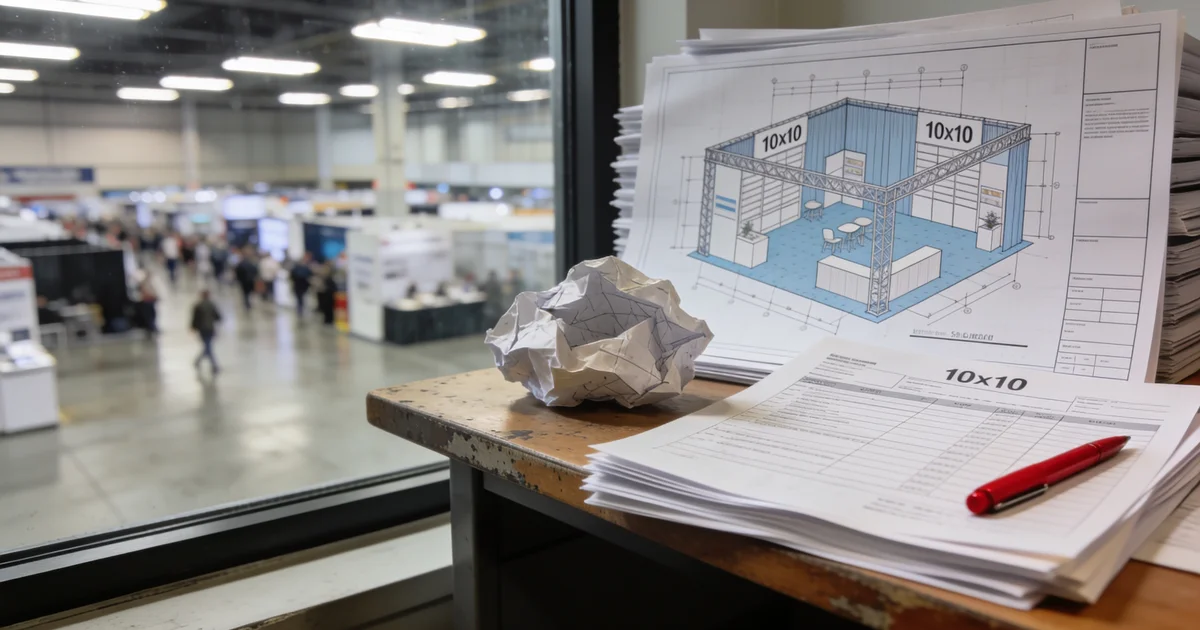
Short answer: A 10x10 trade show booth is a standard 100-square-foot inline exhibit space, usually ten feet wide and ten feet deep. In 2026, it works best with one clear headline, one visible demo or product proof, one small counter or storage point, and two to three trained staff. The winning 10x10 booth is not the one with the most objects; it is the one a qualified visitor can understand and enter without friction.
I like the 10x10 footprint because it exposes discipline. You cannot hide a weak message behind architecture. You cannot fix poor staffing with a lounge. You cannot add three demo stations and hope traffic will sort itself out. A 10x10 booth forces the commercial question: what should the right buyer do in the next two minutes? If the answer is clear, the footprint can punch above its size. If the answer is fuzzy, a bigger booth would only make the confusion more expensive.
What fits in a 10x10 trade show booth?
A standard 10x10 booth gives you 100 square feet on paper, but the usable visitor space is smaller once you add a backwall, counter, demo product, literature, staff, and personal bags. Most 10x10 booths are inline spaces with neighbors on both sides and one open aisle. Corner 10x10 booths have two open sides and usually offer better passive traffic, but the same design discipline applies.
What fits: a backwall or portable display, one concise message, one small demo station, one counter or plinth, a monitor, two stools if meetings are short, and storage hidden behind or inside the counter. What usually does not fit: a reception desk across the front, a full meeting table, multiple large product displays, a prize wheel, two literature racks, and four staff standing shoulder to shoulder at the aisle.
CEIR has often reported that booth space can account for about 25-35% of total exhibiting budget. With a 10x10, the space fee may look manageable, but the full cost still includes display, freight, material handling, labor, travel, lead capture, and follow-up. I recommend reading this guide alongside how much it costs to exhibit at a trade show and our average booth cost breakdown.
10x10 layout rules
The front third should stay open. A counter at the aisle edge feels safe to exhibitors because it creates a boundary, but it also tells buyers they are interrupting you. Put a greeter near the aisle, not behind furniture. Place the demo or product proof one step inside the booth so the visitor can see activity before committing to enter.
The backwall should carry the primary message, not a full brochure. The top line needs to be readable from 15-30 feet. The support line can define segment, proof, or category. Small icons, paragraphs, and QR code clusters belong lower or off the main view. If you need a deeper framework, use our booth design guide.
Keep private storage invisible. Personal bags, coffee cups, sample boxes, and extra literature create the impression that the booth is a temporary desk. A 10x10 has no room for clutter. If the display system cannot hide basics, fix that before adding more graphics.
| Zone | Recommended use | Avoid |
|---|---|---|
| Front 3 feet | Open entry, greeter position, visible invitation | Counter wall, giveaway pile, staff huddle |
| Middle 4 feet | Demo plinth, monitor, sample handling, qualifier conversation | Large table that blocks turning space |
| Back 3 feet | Backwall message, hidden storage, secondary proof | Dense copy, bags, unused boxes, staff retreat |
Cost planning for a 10x10 booth
A lean 10x10 can be very economical, but the low footprint can create false confidence. The booth space is only one line item. Portable display kits, graphics, flooring, freight, drayage, electrical, furniture, badge scanners, staff travel, hotel rooms, and lead follow-up all need a line in the plan.
| Scenario | Display approach | Budget posture | Best fit |
|---|---|---|---|
| Test show | Portable backwall, one counter, simple lighting | Low | Validating audience quality before repeat spend |
| Repeat regional calendar | Owned modular kit with refreshed graphics | Moderate | Teams attending similar 10x10 shows several times per year |
| Flagship small booth | Premium rental or custom elements within tight footprint | Moderate to high | High-value meetings where polish matters but space is fixed |
If you are not sure whether to own the kit, compare reuse and storage against rental in our rent-or-buy guide. If your total budget is not yet approved, use our B2B show selection guide to avoid spending on a booth before you know the event deserves it.
Staffing a 10x10 booth
Two trained people can run a 10x10 well. Three can work during peak traffic if roles are clear. Four usually becomes crowding unless the booth has a corner layout or scheduled meetings. I assign one greeter to the aisle edge and one qualifier or demo lead inside. If a third person is present, they rotate breaks, handle booked meetings, or capture notes.
The greeter should not ask, "Can I scan your badge?" as the first line. A better opener connects to the outcome on the backwall: "Are you looking at reducing service turnaround this year?" or "Are you comparing suppliers for the next procurement cycle?" The qualifier then captures role, timing, pain, and next step. Badge scans without notes are a vanity metric.
Pre-booked meetings matter even in small booths. A 10x10 cannot host long private discussions, but it can start them and schedule the next call. If you rely only on walk-up traffic, you are asking the smallest footprint to do all the demand creation work. Use post-event follow-up to turn short conversations into booked actions within 24-48 hours.
How a 10x10 competes with larger booths
A 10x10 cannot out-shout an island, but it can out-clarify one. Many large booths fail because their demos face inward, staff cluster at the back, and messaging tries to satisfy every product team. A small booth with one clear promise can stop the right buyer faster.
Use contrast. If the row is full of "solutions" language, put a measurable outcome on the wall. If competitors show static backdrops, run a short demo loop. If neighbors rely on swag, use a specific question that signals expertise. The tactics in our trade show booth design guide and our booth display guide both apply, but the 10x10 version must be more ruthless.
Do not apologize for the footprint. A buyer with a real problem does not need a sofa to know whether you are relevant. They need clarity, proof, and a next step. Put those three elements where they can see them.
Pre-show checklist for a 10x10
- Choose the right event: Start with the ExhibitionsVoice directory and shortlist shows by sector and buyer density.
- Lock the message: One outcome headline, one support line, one proof point.
- Confirm the kit: Backwall, counter, cases, flooring, monitor mount, lights, power, and replacement graphics.
- Rehearse roles: Greeter, qualifier, demo handoff, breaks, and note capture.
- Model cost: Space, display, freight, labor, travel, lead capture, and follow-up.
- Plan promotion: If your company sells to exhibitors, use our media pack to reach buyers before the hall opens.
- Schedule follow-up: Segment leads before the show so post-event outreach is not improvised.
FAQ
What is a 10x10 trade show booth?
A 10x10 trade show booth is a 100-square-foot exhibit space, usually ten feet wide by ten feet deep. It is commonly sold as an inline booth with one open aisle side, though corner 10x10 spaces may have two open sides.
How much does a 10x10 trade show booth cost?
The space fee is only the starting point. Total cost includes display, graphics, flooring, freight, drayage, labor, electrical, furniture, travel, staffing, lead capture, and follow-up. Use a full exhibiting budget rather than judging by booth space alone.
How many staff should work a 10x10 booth?
Two trained staff are usually enough: one greeter at the aisle and one qualifier or demo lead inside. A third person can help during peak traffic or meetings. Four often creates crowding unless roles are tightly managed.
What should I put in a 10x10 trade show booth?
Use a readable backwall, one clear buyer outcome, one demo or product proof, one counter or plinth, hidden storage, and simple lighting. Avoid large tables, clutter, dense text, and furniture that blocks entry.
Can a 10x10 booth generate serious leads?
Yes, if the show has the right audience and your booth supports qualification. A 10x10 can produce strong pipeline when the message is specific, the demo is visible, staff capture useful notes, and follow-up happens quickly.
Should I rent or buy a 10x10 display?
Rent or use a simple portable system for an untested show. Consider buying a modular 10x10 kit when you attend several similar shows and can manage storage, repairs, freight, and graphic refreshes.
What fits in a 10x10 trade show booth?
Editorial coverage for 10x10 trade show booth — practical criteria, budget context, and directory-backed planning for 2026 exhibitors. See the full article body for tables and FAQs.
10x10 layout rules
Editorial coverage for 10x10 trade show booth — practical criteria, budget context, and directory-backed planning for 2026 exhibitors. See the full article body for tables and FAQs.
Cost planning for a 10x10 booth
Editorial coverage for 10x10 trade show booth — practical criteria, budget context, and directory-backed planning for 2026 exhibitors. See the full article body for tables and FAQs.
Staffing a 10x10 booth
Editorial coverage for 10x10 trade show booth — practical criteria, budget context, and directory-backed planning for 2026 exhibitors. See the full article body for tables and FAQs.
Common exhibitor questions
What should I budget for 10x10 trade show booth?
Budget depends on footprint, show tier, and whether you rent, buy portable, or commission custom. Use our all-in exhibit cost guide and booth cost breakdown for ranges.
How do I choose the right option for 10x10 trade show booth?
Match format to show frequency, brand requirements, and freight constraints. Multi-show calendars usually favor modular or owned portable systems.
Where do I find shows to exhibit at?
Browse the ExhibitionsVoice trade show directory and city hubs, then confirm dates on the organizer site before you book space.
Editorial standards & corrections
This guide is maintained by the ExhibitionsVoice editorial team. We cross-check dates, venues, and organizer names against official sources before listing events. Spot an error? Use our contact form with the event URL and corrected details — every correction request is read by editorial.
Read more: About ExhibitionsVoice · FAQs · All exhibitor guides
Related articles
Oil and gas trade shows 2026: energy calendar and how to pick
Oil and gas trade shows for 2026 — ADIPEC, WETEX, and offshore energy fairs we score for NOC, IOC, and energy-tech exhibitors.

CPHI India 2026 exhibitor guide: Delhi pharma ingredients floor
CPHI India 2026 exhibitor guide for 23-25 November at IICC Yashobhoomi, New Delhi — API, CDMO, and packaging teams scoring South Asia's ingredients floor.

Fintech trade shows 2026: payments calendar and how to pick
Fintech and payments trade shows for 2026 — Money20/20 USA, Sibos, and how banks and vendors pick Tier A/B/C money-ecosystem floors.
ADIPEC 2026 exhibitor guide: Abu Dhabi energy floor
ADIPEC 2026 exhibitor guide for 2-5 November at ADNEC Centre Abu Dhabi — who should exhibit, hall logistics, and how we score the energy floor.