
Article
How trade shows are reshaping manufacturing & automation in 2026
A sector deep dive on how B2B exhibitions influence manufacturing and automation — buyer behavior, flagship vs regional spend, AI on the floor, and where 324+ listed fairs cluster worldwide.

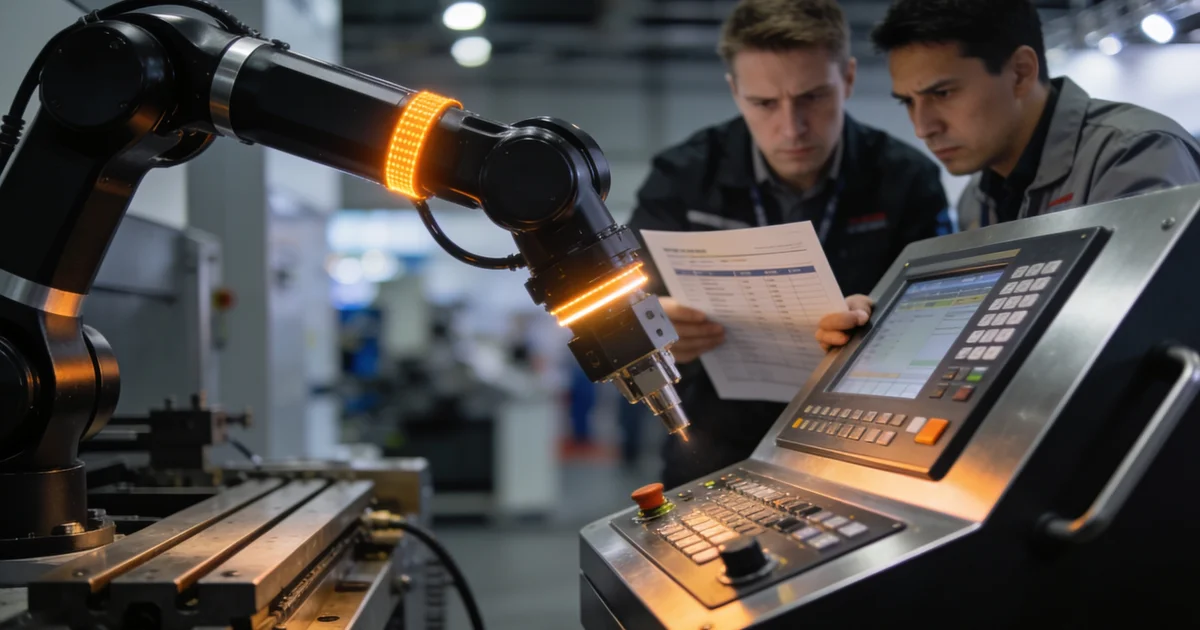
Article
For the manufacturing and industrial automation sector, trade shows remain a critical, albeit evolving, battleground. My thesis is this: in 2026, these shows are still the fastest way to compress a 12-month technology scan into four days. But that efficiency comes with a caveat: it only works if your team is equipped to sell engineering outcomes, not just booth theater.
We've seen the industry floor narratives shift. The buzz around AI, robotics, and digital twins is undeniable. Yet, what procurement ultimately funds are provable improvements in cycle time, reductions in cost-per-unit, and minimized integration risk. Exhibitors who understand this distinction and tailor their approach are the ones who convert show floor conversations into pipeline influence.
TL;DR: Manufacturing and automation trade shows in 2026 are vital for technology evaluation and business development, but exhibitor success hinges on demonstrating concrete engineering outcomes and strategically managing a portfolio of flagship and regional events to influence long procurement cycles.
Where the sector meets the show floor
In manufacturing and automation, the trade show floor isn't just a place for product launches; it's a critical nexus for discovery, partnership formation, and capital equipment decisions. For buyers, these events offer a unique opportunity to interact with complex machinery, compare solutions side-by-side, and engage directly with engineers and product specialists. This hands-on evaluation is particularly crucial in a sector where purchasing decisions often involve significant capital outlay and long-term operational impact.
For exhibitors, the value extends beyond lead generation. It's about market intelligence, competitive analysis, and solidifying brand presence within a highly specialized community. A well-executed presence allows companies to gauge market demand for new technologies, collect feedback on prototypes, and strengthen relationships with existing clients and channel partners. Given the often lengthy sales cycles in this industry, the show floor acts as a significant accelerator, allowing multiple stakeholders from a single buying organization to converge and advance their evaluation process in a condensed timeframe.
However, the nature of these interactions has evolved. Engineering-led buyers are less interested in generic sales pitches and more focused on detailed technical specifications, live demonstrations of throughput, and verifiable ROI. They come to shows with specific problems to solve, and they expect exhibitors to present solutions that directly address those pain points, backed by data and expert knowledge.
What changed in 2026
The manufacturing and automation landscape in 2026 is characterized by several powerful forces, all of which are reshaping the trade show experience. On the show floor, the narrative is heavily dominated by advanced technologies: artificial intelligence, collaborative robots, humanoids, and digital twins. Exhibitors are showcasing increasingly sophisticated solutions that promise unprecedented levels of efficiency and precision.
However, the real-world challenges facing the industry often temper this technological optimism. Workforce gaps continue to be a significant concern for manufacturers globally. Exhibitors are increasingly positioning automation not just as a cost-saving measure, but as a critical tool to augment human capabilities and address skilled labor shortages. This shift in messaging from replacement to augmentation is a key differentiator for successful exhibitors.
Another major force is reshoring and nearshoring initiatives. Geopolitical shifts and supply chain vulnerabilities have prompted many companies to re-evaluate their global production strategies. This trend creates new opportunities for domestic and regional suppliers of automation equipment and manufacturing technologies. Trade shows in key reshoring regions are seeing increased attendance from companies looking to establish or expand localized production capabilities.
The hype around AI and humanoids, while visually compelling, needs to be grounded in practical application. Buyers are discerning; they want to see how these technologies translate into tangible throughput gains, reduced downtime, and improved quality control. The "wow" factor needs to quickly give way to a clear value proposition. Exhibitors who can demonstrate provable throughput gains, rather than just showcasing futuristic concepts, will capture the attention and budget of engineering-led buyers.
The economic climate also plays a role. With tighter budgets, every investment, including trade show participation, comes under increased scrutiny. This necessitates a more strategic approach to exhibition planning, focusing on clear objectives, targeted engagement, and robust ROI measurement beyond simple lead counts.
How buyers behave now
The days of casual browsing and swag-collecting as the primary mode of trade show engagement are largely over, especially in the manufacturing and automation sector. Today's buyers, particularly the engineering and procurement teams, approach trade shows with a highly analytical and problem-solving mindset. They are engineering-led in their evaluation, meaning they prioritize technical specifications, performance data, and integration capabilities over flashy presentations.
They expect live, working demonstrations. A static display or a slick video isn't enough to convey the functionality and reliability of complex machinery or software. Buyers want to see the technology in action, understand its operational parameters, and ask detailed questions about its integration into their existing systems. This often means exhibitors need to invest in more elaborate and interactive booth setups that allow for hands-on engagement and real-time data visualization.
The procurement cycles in manufacturing are notoriously long, often stretching over many months, if not years, for significant capital equipment. This means a trade show interaction is rarely a transactional event leading to an immediate sale. Instead, it's a critical touchpoint in a much longer buyer journey. The goal for exhibitors isn't necessarily to close a deal on the spot, but to move the prospect further down the pipeline, establish credibility, and gather the necessary information to facilitate subsequent follow-ups.
Buyers are also doing more pre-show research. They arrive at the event with a shortlist of companies they want to see, questions they need answered, and specific problems they hope to address. This makes pre-show marketing and appointment setting more important than ever. Exhibitors who can secure pre-booked meetings with qualified prospects are far more likely to have meaningful conversations and advance their sales process.
Finally, the focus is heavily on outcomes. Engineering teams aren't just buying a machine; they're buying increased uptime, reduced defect rates, higher throughput, and lower operational costs. Exhibitors must articulate their value proposition in terms of these measurable outcomes, rather than simply listing features. This requires a deep understanding of the buyer's operational context and business objectives.
Before committing to a show, identify the top 3-5 engineering challenges your target buyers face. Then, design your booth content and staff training to directly demonstrate how your solution solves those specific problems, complete with technical specs and ROI projections. Forget the general sales pitch; focus on engineering outcomes.
Flagship vs regional — splitting booth budget
Deciding where to allocate exhibition budgets is a perennial challenge for marketing managers in manufacturing and automation. It's not a flat calendar of events; rather, I see it as a tiered pipeline. We typically categorize shows into Tier A (flagship global events), Tier B (major national or large regional shows), and Tier C (highly specialized niche or smaller regional events).
Tier A: Flagship Global Events These are the industry behemoths – events like IMTS (International Manufacturing Technology Show) in North America, Automate (for robotics and automation), and Europe's Hannover Messe. These shows command significant investment in terms of booth space, logistics, and personnel. Their value lies in unmatched global reach, the sheer volume of high-level decision-makers, and the opportunity to launch major products. For many, these are brand-building events, shaping market perception and attracting international partners. The ROI here often involves long-term pipeline influence and strategic partnerships rather than direct, immediate sales.
Tier B: Major National/Large Regional Shows These events serve important national markets or significant industrial clusters. They often offer a more focused audience than Tier A shows, with a higher concentration of buyers from a specific geography or sub-segment of manufacturing. Examples might include large packaging shows like PACK EXPO in its various editions or specialized events for specific materials or processes. The cost-to-attend is generally lower, and the sales cycle might be slightly shorter due to geographical proximity. This is where many companies focus their direct sales efforts and generate a substantial portion of their qualified leads.
Tier C: Niche & Local Regional Events These are smaller, highly specialized shows or local regional events. While they might not attract thousands of attendees, the quality of engagement can be exceptionally high. For example, a show focused specifically on additive manufacturing for medical devices, or a regional event targeting the automotive supply chain in a particular state. The investment is much lower, allowing for a more agile and targeted approach. These shows are excellent for nurturing existing relationships, prospecting within a very specific vertical, or testing new product concepts with a captive audience. The ROI here is often seen in high-quality, pre-qualified leads and deeper engagement with a specific customer segment.
The challenge for many lean automation teams is the overlap. Spreading resources too thin across too many shows, without a clear tiered strategy, can drain budgets and personnel without delivering proportional returns. A common pitfall is treating every show the same, leading to under-resourced booths at major events or overspending on smaller ones. A strategic approach involves aligning each show's tier with specific marketing and sales objectives, ensuring that investment matches the potential return and the strategic importance of the event.
My editorial team's research across our directory shows that companies often find success by carefully balancing their portfolio: dedicating significant resources to one or two Tier A events for brand and global reach, a few Tier B events for strong regional lead generation, and a select number of Tier C events for targeted niche engagement or deeper customer relationships.
Where manufacturing & automation fairs cluster
Our analysis of the 324+ manufacturing and automation events listed on ExhibitionsVoice reveals a fascinating global distribution, reflecting both established industrial powerhouses and rapidly emerging markets. While Western flagships like IMTS and Hannover Messe remain critical, the sheer volume of activity in certain Asian markets is striking.
Looking at our data, major exhibition venues play a significant role in hosting these events. For instance, Jakarta International Expo (JIExpo) in Indonesia leads with 12 listed events, indicating a strong regional hub for manufacturing and technology. Similarly, Queen Sirikit National Convention Center (QSNCC) in Bangkok and Shanghai New International Expo Centre (SNIEC) in China each host 7 events, underscoring the density of industrial activity across Asia Pacific. Tokyo Big Sight and Expo Center Norte in Brazil also show significant activity, each with 4 events, highlighting other important regional centers.
This geographic clustering indicates that while large, internationally recognized events draw a global audience, there's also a robust ecosystem of regional and national shows that cater to specific market needs and supply chains. Exhibitors looking to penetrate these markets often find that a strategic presence at these regional hubs, beyond just the marquee names, is essential.
Leading organizers also reflect this global spread. Informa Markets, with 27 listed events in the sector, demonstrates a broad international footprint. Other significant players like Make: Community LLC and Chan Chao International Co., Ltd. (each with 11 events), CNG Trade Events (10 events), and RX China (7 events) are instrumental in shaping the exhibition landscape across different continents, particularly in Asia.
This distribution means that a comprehensive exhibition strategy must consider both the global flagships and the regional powerhouses. For companies focusing on growth in Asia, for example, a calendar heavily weighted towards events in Jakarta, Shanghai, or Bangkok would be crucial. Conversely, for North American market penetration, events anchored around cities like Chicago (home to IMTS and Automate) would be paramount.
You can explore the full range of events in this sector and filter by region, date, and more on our Automation Industry Hub.
Measuring trade show influence beyond badge scans
In manufacturing and automation, focusing solely on the number of badge scans or raw leads generated at a trade show is a flawed metric for ROI. Given the long sales cycles and the complexity of these solutions, the real value lies in pipeline influence and the quality of engagement. For marketing managers tasked with defending their exhibition spend, this means shifting the focus to more sophisticated metrics.
1. Pre-booked Meetings & Account Penetration: A key indicator of success is the number of pre-booked meetings with target accounts. This demonstrates proactive engagement and ensures that your sales team is having high-quality conversations with qualified prospects. Track the number of unique companies represented in these meetings, especially those that are strategic accounts or new market entrants. A high percentage of pre-booked meetings against total meetings indicates an effective pre-show marketing strategy.
2. Demo-to-Opportunity Ratio: For engineering-led buyers, live demonstrations are paramount. Track how many demos translate into a qualified sales opportunity (e.g., a follow-up meeting, a request for proposal, or a detailed technical consultation). This metric directly links the show floor experience to tangible pipeline progression. The goal isn't just to show the product, but to use the demo as a springboard for deeper engagement.
3. Post-Show Engineering Follow-Up & Technical Deep Dives: Given the technical nature of these sales, successful trade show engagement often leads to requests for detailed engineering discussions, site visits, or proof-of-concept projects. Track the number of these post-show technical deep dives initiated. This indicates that the show floor interaction successfully piqued the interest of the technical buying committee and moved them closer to a solution evaluation.
4. Pipeline Acceleration & Stage Advancement: Work closely with your sales team to attribute trade show interactions to specific deals in the CRM. Did a show floor meeting accelerate a deal that was stalled? Did it introduce your solution to a new decision-maker within an existing opportunity? Track how many opportunities advance to the next stage of the sales pipeline directly as a result of show participation. This is where the long-term influence becomes clear, even if the sale isn't closed for months.
5. Cost Per Qualified Interaction (CPQI): Beyond cost per lead, calculate the cost per *qualified interaction*. This involves factoring in the total cost of the exhibition (booth space, travel, staffing, shipping, marketing) and dividing it by the number of truly qualified engagements that lead to pipeline progression. This metric provides a more accurate picture of efficiency than simply dividing by total leads, many of which may not be qualified.
The "hidden costs" of exhibiting extend far beyond booth rental. When planning budgets, remember to account for shipping and drayage (often 2-3x the cost of shipping to the venue), electricity and internet (highly marked up by venues), staffing travel and accommodation, pre-show marketing campaigns, post-show follow-up automation, and the opportunity cost of your team's time away from other duties. A comprehensive budget needs to cover these line items to accurately calculate the true CPQI.
By focusing on these metrics, marketing managers can move beyond anecdotal evidence and provide concrete data to justify trade show investments, demonstrating their direct contribution to the sales pipeline and overall business objectives.
Upcoming trade shows (324 in directory)
Sample from our live catalogue — verify dates on official organizer sites before booking.
| Event | Dates | City |
|---|---|---|
| AIAA AVIATION and Aeronautics Forum (AIAA AVIATION Forum) | Dates TBC | San Diego |
| Zambia International Trade Fair (ZITF) | Dates TBC | Ndola |
| PACK PYMES (Concurrent Event at Gastromaq Perú 2026) | Dates TBC | Lima |
| InterAuto Moscow (Интеравто) | Dates TBC | Moscow |
| WORLD OF CONCRETE INDIA | Dates TBC | Mumbai |
| Indonesia Technology and Innovation (INTI) | Dates TBC | Jakarta |
| CHINA EPOWER | Dates TBC | Shanghai |
| PACK EXPO | Dates TBC | Casablanca |
| WOOD & FURNITURE ASIA | Dates TBC | Karachi (Lahore edition not confirmed) |
| BIG CIO Show & Awards 2026 (15th Edition) | Dates TBC | Bengaluru |
| electronica China | Dates TBC | Shanghai |
| Wire & Cable Show Malaysia | Dates TBC | Kuala Lumpur |
Are manufacturing trade shows still worth it in 2026?
Yes, absolutely, but the definition of "worth it" has evolved. In 2026, manufacturing trade shows are still invaluable for compressing long technology evaluation cycles, allowing engineering-led buyers to conduct hands-on comparisons and engage directly with technical experts. Their worth is measured less by immediate sales and more by pipeline influence, acceleration of opportunities, and strategic relationship building. Exhibitors must focus on demonstrating tangible engineering outcomes and adopting sophisticated ROI tracking methods.
Which manufacturing trade shows matter most in North America?
For broad market reach and strategic impact, flagship events like IMTS (International Manufacturing Technology Show) and Automate are paramount. These attract a global audience and showcase the cutting edge of the industry. Beyond these, specialized shows catering to specific verticals (e.g., aerospace, medical devices) or regional manufacturing hubs also hold significant weight depending on your target market. For packaging, PACK EXPO is also a key event.
How long is the typical manufacturing sales cycle after a trade show?
The sales cycle in manufacturing, especially for capital equipment and complex automation solutions, is typically long, often ranging from 6 to 18 months, or even longer for very large projects. A trade show interaction usually serves as a crucial acceleration point, moving a prospect from awareness to consideration or even evaluation, rather than leading to an immediate close. The true ROI is seen in how the show shortens or influences this extended pipeline.
How do I find manufacturing & automation fairs worldwide?
You can find a comprehensive list of manufacturing and automation fairs globally by using specialized B2B directories like ExhibitionsVoice. Our platform allows you to filter by industry, date, and location to discover events ranging from major flagships to regional and niche shows. You can explore our Automation Industry Hub for a curated overview.
Should we exhibit at a regional fair or only flagships?
A balanced strategy often yields the best results. Flagship events (Tier A) are crucial for brand building, global market presence, and major product launches. Regional fairs (Tier B/C) offer more targeted access to specific geographic markets or niche segments, often with a lower cost of entry and higher quality, localized leads. For many companies, a mix allows for both broad market impact and focused, cost-effective engagement with key customer segments.
If I were shortlisting shows for the next quarter today, I would start by identifying one Tier B regional show that aligns perfectly with a specific sales territory or product launch, and one Tier C niche event where our product differentiation is exceptionally strong. This allows for focused, high-impact engagement without overextending resources, while still keeping an eye on the bigger flagships for the following year's strategic planning. The key is to know exactly what outcome you expect from each show, and then build your strategy backwards from there.
Editorial standards & corrections
This guide is maintained by the ExhibitionsVoice editorial team. We cross-check dates, venues, and organizer names against official sources before listing events. Spot an error? Use our contact form with the event URL and corrected details — every correction request is read by editorial.
Read more: About ExhibitionsVoice · FAQs · All exhibitor guides
Related articles
Oil and gas trade shows 2026: energy calendar and how to pick
Oil and gas trade shows for 2026 — ADIPEC, WETEX, and offshore energy fairs we score for NOC, IOC, and energy-tech exhibitors.
CPHI India 2026 exhibitor guide: Delhi pharma ingredients floor
CPHI India 2026 exhibitor guide for 23-25 November at IICC Yashobhoomi, New Delhi — API, CDMO, and packaging teams scoring South Asia's ingredients floor.
Fintech trade shows 2026: payments calendar and how to pick
Fintech and payments trade shows for 2026 — Money20/20 USA, Sibos, and how banks and vendors pick Tier A/B/C money-ecosystem floors.
ADIPEC 2026 exhibitor guide: Abu Dhabi energy floor
ADIPEC 2026 exhibitor guide for 2-5 November at ADNEC Centre Abu Dhabi — who should exhibit, hall logistics, and how we score the energy floor.