
Article
Planning a trade show in 2026: the 90-60-30 exhibitor timeline
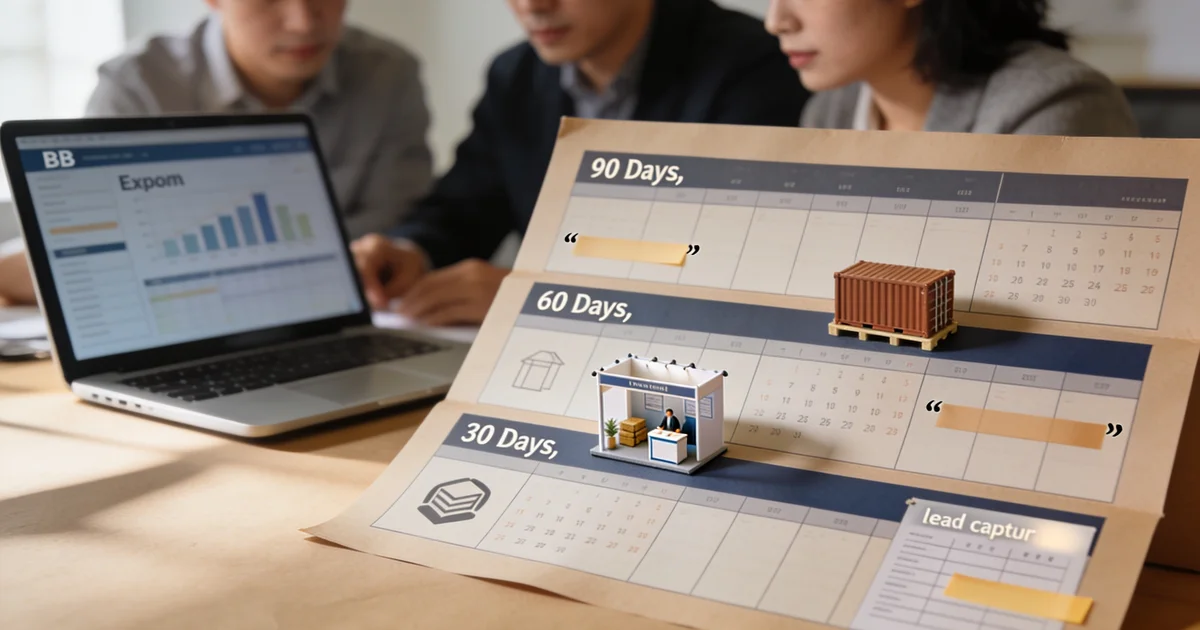
Planning a trade show is a timeline problem — the 90-60-30 milestones we use for booth, freight, staffing, and follow-up before move-in.

Article
Short answer: Planning a trade show in 2026 works best as a 90-60-30 timeline — 90 days for show selection and budget sign-off, 60 days for booth assets and freight booking, 30 days for staff training and scanner QA — then show-week execution and 48-hour follow-up. Split marketing milestones into our marketing checklist; keep freight, packing, and hidden costs on ops tracks linked below.
I have watched teams treat trade show planning like a single project plan that lives in one shared doc. That doc is usually outdated by move-in. The fairs that run smoothly share one trait: milestones are dated backward from show open, owned by name, and split by function. Marketing is not waiting on freight. Finance is not surprised by drayage at 21 days. This page is the ops timeline I use after we shortlist a fair on ExhibitionsVoice — not a generic "planning tips" list.
Why planning a trade show is a timeline problem
Trade show planning fails in predictable places: late exhibitor manual reads, booth design changes after the graphics deadline, scanners untested until hour one on the floor, and follow-up that starts "when we get back to the office." A phased timeline fixes that by making dependencies visible. You cannot train staff on a demo that is not approved. You cannot approve a demo without a show brief. You cannot write a show brief without knowing which fair passed ICP fit.
I align every plan to three anchors: show open date, advance warehouse deadline, and graphics production cutoff. Those three dates drive everything else. If your team only tracks show open, you will pay rush fees someone else avoided.
90 days out — selection, budget, and exhibitor manual
Ninety days is strategy and commitment, not banner design. I want these boxes checked before anyone talks to a booth vendor:
- ☐ Confirm the fair on ExhibitionsVoice; verify dates and venue on the organizer link
- ☐ Score Tier A/B/C; compare alternatives with our budget selection framework
- ☐ Finance signs all-in budget using the hidden costs beyond booth rent guide — not space fee alone
- ☐ Download exhibitor service kit; note advance warehouse, direct-to-stand, and labor order deadlines
- ☐ Assign RACI: booth lead, marketing lead, finance approver, freight owner
- ☐ Lock one demo hook and qualification script outline for booth and marketing to share
First-time exhibitors should mirror this window against our 90/60/30 first-time exhibitor checklist — same cadence, more hand-holding on vendor quotes and manual terms.
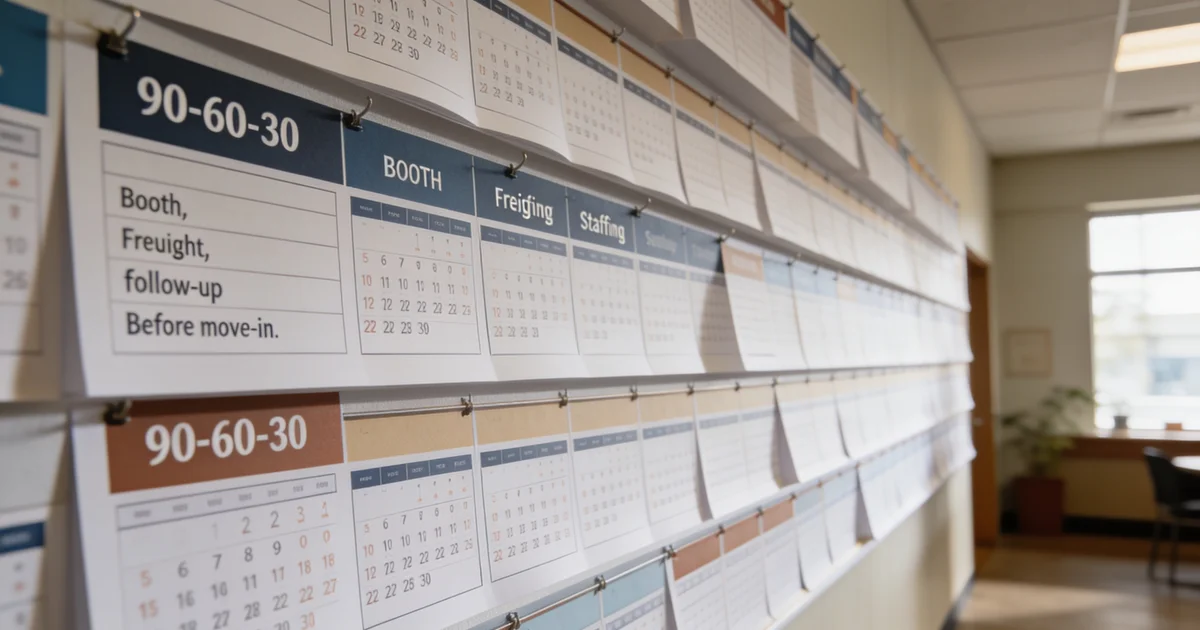
60 days out — booth, freight, and marketing infrastructure
Sixty days is when physical and digital infrastructure must exist. Marketing can parallel this phase using the trade show marketing checklist; ops owns the lines below:
- ☐ Approve booth layout and electrical plan; confirm demo equipment power draw
- ☐ Book outbound freight — advance warehouse vs direct-to-stand per manual
- ☐ Order labor, rigging, carpet, and furniture through official channels only
- ☐ Send graphics to production with a frozen headline hierarchy
- ☐ Reserve hotels and travel; align staff badges with move-in schedule
- ☐ Configure badge scanner, CRM fields, and lead routing tiers
This is also when I reconcile quotes against hidden line items. Material handling, union labor, and rush print are where "we thought we had budget" turns into executive surprises. I re-open the hidden costs guide at 60 days even if finance signed off at 90 — quotes have a way of sprouting fees.
30 days out — training, packing, and dry run
Thirty days is execution readiness. The booth should be designed; now the team must operate it under stress:
- ☐ Run a 30-minute staff dry run: pitch, demo, qualification, CRM logging
- ☐ Finalize the pack list with our what to pack for every trade show guide
- ☐ Test scanner offline backup; confirm spare batteries and charging in carry-on
- ☐ Print booth run sheet: move-in time, aisle number, emergency contacts, labor orders
- ☐ Marketing launches pre-show outreach per the marketing checklist — same demo hook
- ☐ Assign post-show follow-up owners by lead tier before anyone travels
Packing is not a footnote. Teams that improvise at the hotel lose chargers, scripts, and meds while the floor is open. I treat the pack guide as part of planning, not a travel afterthought.
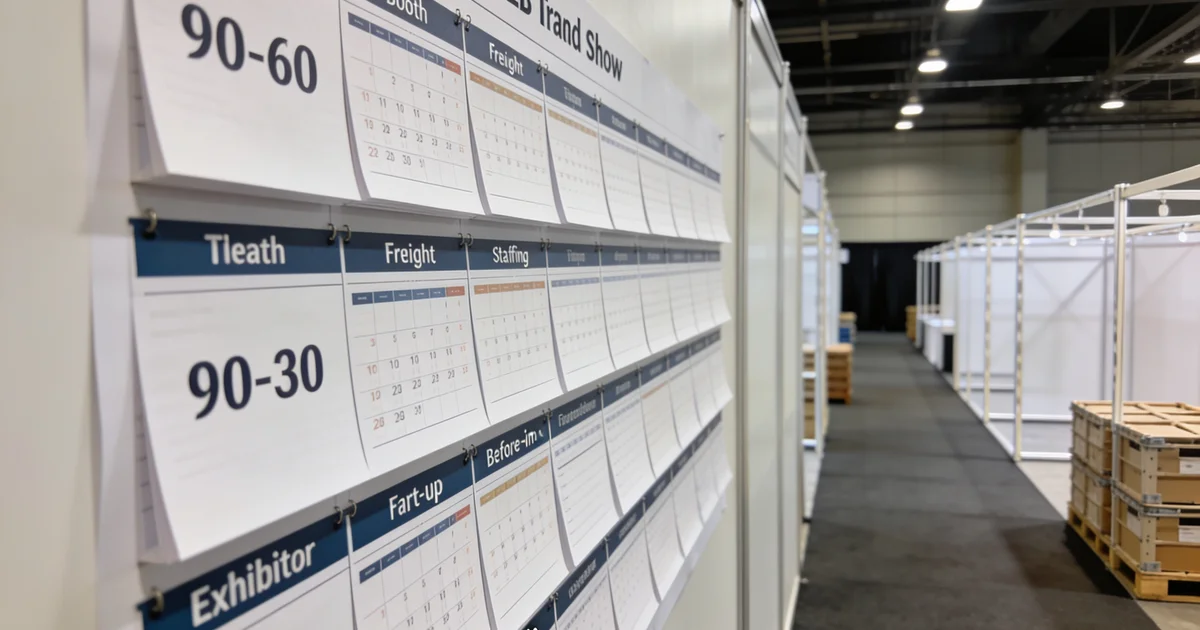
Show week and the first 48 hours after
Planning does not stop at doors open. I use a lightweight show-week cadence:
| Window | Ops focus | Handoff |
|---|---|---|
| Move-in day | Verify booth position, power, demo connectivity, and labor completion | Booth lead signs photos to marketing for social posts |
| Daily floor | Tier-tag leads within 10 minutes; note demo objections in CRM | Hot leads ping assigned AE same day |
| Move-out | Confirm freight labels, empty booth photos, and damage claims | Finance gets final service invoices within 72 hours |
| 48 hours post | Warm follow-up sends; internal debrief on ICP quality | Marketing publishes recap; ops archives pack list updates |
The exhibitors who win treat show week as the middle of the plan, not the finish line. Follow-up SLAs belong in the plan document at 30 days, not in a Monday meeting after everyone is exhausted.
How this timeline differs from marketing-only planning
Marketing owns audience, content, landing pages, and nurture. Ops owns booth, freight, labor, packing, and scanner discipline. I keep separate checklists so neither team hides behind the other when something slips.
Use this page for the ops backbone. Use the marketing checklist for outreach calendars. Use the first-time exhibitor checklist when the team has never moved freight or read a drayage form. All three should reference the same show name, demo hook, and dates from ExhibitionsVoice.
Common planning mistakes I still see in 2026
- Single-owner plans — one marketing manager carries ops tasks "until later."
- Budget = booth rent — freight, labor, and travel consume the rest; see hidden costs guide.
- Late manual reads — advance warehouse rules are non-negotiable; missed dates cost more than the booth.
- Untested scanners — badge capture fails silently while reps stack business cards.
- Follow-up TBD — post-show sends drift a week; warm leads cool.
Planning a trade show is repetitive once the timeline exists. Reuse the same 90-60-30 skeleton for every Tier B and Tier A fair; shrink it for Tier C validation events. The goal is not a thicker plan — it is fewer surprises on move-in morning.
FAQ
When should I start planning a trade show in 2026?
Start serious planning 90 days before move-in for Tier B fairs; Tier A flagship shows often need six to twelve months for space and build lead times. At 90 days, confirm the fair, sign all-in budget, and read the exhibitor manual before creative work accelerates.
What is the 90-60-30 trade show planning timeline?
90 days: show selection, budget, manual deadlines, and RACI. 60 days: booth approval, freight booking, graphics production, and scanner setup. 30 days: staff dry run, pack list finalization, and pre-show outreach launch. Show week adds daily lead routing and 48-hour follow-up.
How is this different from the first-time exhibitor checklist?
The first-time exhibitor checklist is the same cadence with more detail for teams new to freight, labor forms, and vendor quotes. This page is the ops overview; use the first-timer checklist as the expanded task list.
What should be in a trade show planning budget?
Include booth space, design and build, graphics, freight inbound and outbound, material handling, labor, travel, lead capture, and post-show follow-up time. Booth rent is often only 25–35% of all-in spend — model the rest with our hidden costs guide.
What belongs on a trade show packing list?
Split freight-shipped booth tools from carry-on essentials: scanners, chargers, scripts, meds, and backup badges. Our packing guide aligns with the 30-day milestone in this timeline.
Does ExhibitionsVoice help me plan booth logistics?
We are a B2B trade show directory and editorial publisher, not an organizer or booth vendor. Use ExhibitionsVoice to shortlist fairs and open official exhibitor links; use this timeline and linked checklists for ops execution.
Why planning a trade show is a timeline problem
Plans fail on late manual reads, post-graphics design changes, untested scanners, and delayed follow-up. Anchor on show open, advance warehouse deadline, and graphics cutoff — dependencies must be visible and owned by name.
90 days out — selection, budget, exhibitor manual
Confirm fair on ExhibitionsVoice; Tier score; finance signs all-in budget via hidden costs guide; download service kit; assign RACI; lock demo hook. First-timers: mirror 90/60/30 checklist.
60 days out — booth, freight, marketing infrastructure
Approve layout and power; book freight; order official labor and services; send graphics to production; reserve travel; configure scanner and CRM. Marketing parallels via marketing checklist.
30 days out — training, packing, dry run
Staff dry run; finalize pack list via packing guide; test scanner backup; print booth run sheet; launch pre-show outreach; assign post-show owners by tier.
Show week and first 48 hours after
Move-in verification, daily lead tiering within 10 minutes, move-out freight confirmation, warm follow-up within 48 hours. Treat show week as mid-plan, not finish line.
Ops vs marketing-only planning
Ops owns booth, freight, labor, packing, scanner. Marketing owns audience and nurture. Keep separate checklists referencing the same show, hook, and dates from ExhibitionsVoice.
Common planning mistakes in 2026
Single-owner plans, budget = booth rent only, late manual reads, untested scanners, follow-up TBD. Reuse 90-60-30 skeleton per Tier B/A; shrink for Tier C validation.
Common exhibitor questions
When should I start planning a trade show in 2026?
Start serious planning 90 days before move-in for Tier B fairs; Tier A may need six to twelve months for space and build. At 90 days confirm the fair, sign all-in budget, and read the exhibitor manual.
What is the 90-60-30 trade show planning timeline?
90 days: selection, budget, manual deadlines, RACI. 60 days: booth, freight, graphics, scanner. 30 days: dry run, packing, outreach launch. Show week: daily lead routing and 48-hour follow-up.
How is this different from the first-time exhibitor checklist?
Same cadence with more first-timer detail on vendor quotes and labor forms. This page is the ops overview; the first-time checklist is the expanded task list.
What should be in a trade show planning budget?
Booth space, build, graphics, freight, material handling, labor, travel, lead capture, and follow-up time. Booth rent is often 25–35% of all-in spend — model hidden line items before sign-off.
What belongs on a trade show packing list?
Split freight-shipped booth tools from carry-on essentials: scanners, chargers, scripts, meds, backup badges. Align packing with the 30-day milestone in the ops timeline.
Does ExhibitionsVoice help me plan booth logistics?
We are a B2B directory and editorial publisher, not an organizer or booth vendor. Shortlist fairs on ExhibitionsVoice and use linked checklists for ops execution.
Editorial standards & corrections
This guide is maintained by the ExhibitionsVoice editorial team. We cross-check dates, venues, and organizer names against official sources before listing events. Spot an error? Use our contact form with the event URL and corrected details — every correction request is read by editorial.
Read more: About ExhibitionsVoice · FAQs · All exhibitor guides
Related articles
Oil and gas trade shows 2026: energy calendar and how to pick
Oil and gas trade shows for 2026 — ADIPEC, WETEX, and offshore energy fairs we score for NOC, IOC, and energy-tech exhibitors.

CPHI India 2026 exhibitor guide: Delhi pharma ingredients floor
CPHI India 2026 exhibitor guide for 23-25 November at IICC Yashobhoomi, New Delhi — API, CDMO, and packaging teams scoring South Asia's ingredients floor.

Fintech trade shows 2026: payments calendar and how to pick
Fintech and payments trade shows for 2026 — Money20/20 USA, Sibos, and how banks and vendors pick Tier A/B/C money-ecosystem floors.
ADIPEC 2026 exhibitor guide: Abu Dhabi energy floor
ADIPEC 2026 exhibitor guide for 2-5 November at ADNEC Centre Abu Dhabi — who should exhibit, hall logistics, and how we score the energy floor.