
Article
20 trade show exhibitor tips that actually move pipeline
Twenty practical exhibitor tips for 2026 — show selection, pre-show outreach, booth execution, capture, and follow-up — ranked by pipeline impact, not vanity traffic.
Article
Short answer: The twenty highest-impact trade show exhibitor tips for 2026 are ranked by pipeline impact — qualified meetings, follow-up reply rate, and influenced revenue — not aisle traffic or swag volume. Fix show selection and follow-up first (tips 1–4 and 17–20), then pre-show outreach (5–8), booth execution (9–12), and floor capture (13–16). No booth design saves a wrong fair or a CRM queue that sits ten days.
When I review exhibitor playbooks before show season, the tip lists I see are either logistics checklists dressed as strategy or motivational one-liners that never mention qualification. I compiled this list after pairing dozens of show briefs with our playbook cluster — selection framework, marketing checklist, qualify script, follow-up timeline — and scoring what actually moves pipeline when teams are honest in debrief. Tips are grouped by phase and numbered in impact order within each group. Start at tip 1 even if your booth graphics are already at the printer.
How these tips are ranked
Pipeline impact means qualified meetings booked, follow-up reply rate, and pipeline influenced at day 14 — not badge scans, LinkedIn impressions, or tote bags distributed. Selection and follow-up tips rank highest because teams routinely spend six figures on the wrong show and then wonder why follow-up "doesn't work." Booth tips matter once the calendar slot is defensible. Scale effort to Tier A/B/C using our show budget framework before you treat every tip as mandatory for a Tier C test fair.
Selection — tips 1–4
These four gates decide whether the rest of the list is worth executing. Skip them and you optimize a loss.
1. Score show tier on ICP fit before you sign the booth contract
Book because your buyers attend, not because a competitor's logo appears on the floor plan. I score every candidate on buyer titles, geography, and competitive density using our Tier A/B/C selection framework before any deposit. A prestigious show with the wrong attendee profile is the fastest way to burn a six-figure line item — tip 1 on our five biggest mistakes list for a reason.
2. Shortlist calendar alternatives on ExhibitionsVoice before you commit
Compare at least two fairs in the same sector window — same quarter, overlapping ICP, different cities or organizer profiles. I pull upcoming listings on ExhibitionsVoice, filter by industry and geography, and read attendee marketing on organizer pages before finance sees a single quote. One option on the calendar is not a decision; it is a default.
3. Model all-in spend, not the booth fee on the proposal
Booth space is typically 25–35% of total exhibit spend once you add drayage, labor, travel, graphics rush fees, and sales time on the floor. Teams that budget the proposal line item alone routinely overspend by 40–60% and cut follow-up instead of freight — the mistake framework in our costliest errors guide ties directly to this gate.
4. Freeze rebook vs test-show decision with sales before marketing builds assets
Marketing cannot run a Tier A pre-show calendar if sales treats the fair as a one-off experiment. Align on rebook, test, or skip in the same meeting where you score tier — document the decision in the show brief so outreach quotas match reality. Our budget framework separates Tier C validation from Tier A flagship spend; both teams must agree which mode you are in.
Pre-show — tips 5–8
Pre-show work earns pipeline before move-in. These tips scale with tier; Tier C fairs get a shortened version of tips 6–7 only.
5. Set a pre-show meeting quota tied to show tier
Tier A shows need booked calendars before travel — I recommend a minimum of one confirmed meeting per $3,000–$5,000 all-in spend as a starting guardrail, adjusted for your ACV. Tier B targets warm CRM accounts; Tier C validates messaging with ten targeted DMs, not a mass blast. Walking in cold means your best buyers are already in competitor meetings.
6. Lock one demo hook and ban channel-specific rewrites
Sales email, LinkedIn posts, landing page headline, and booth panel must state the same buyer outcome in the same words. I see teams lose reply rate when marketing "creatives" a different hook per channel — buyers notice the mismatch in the first thirty seconds on the floor. Build from the show brief in our marketing checklist.
7. Run the 90/60/30/7 marketing calendar — not a final-week cram
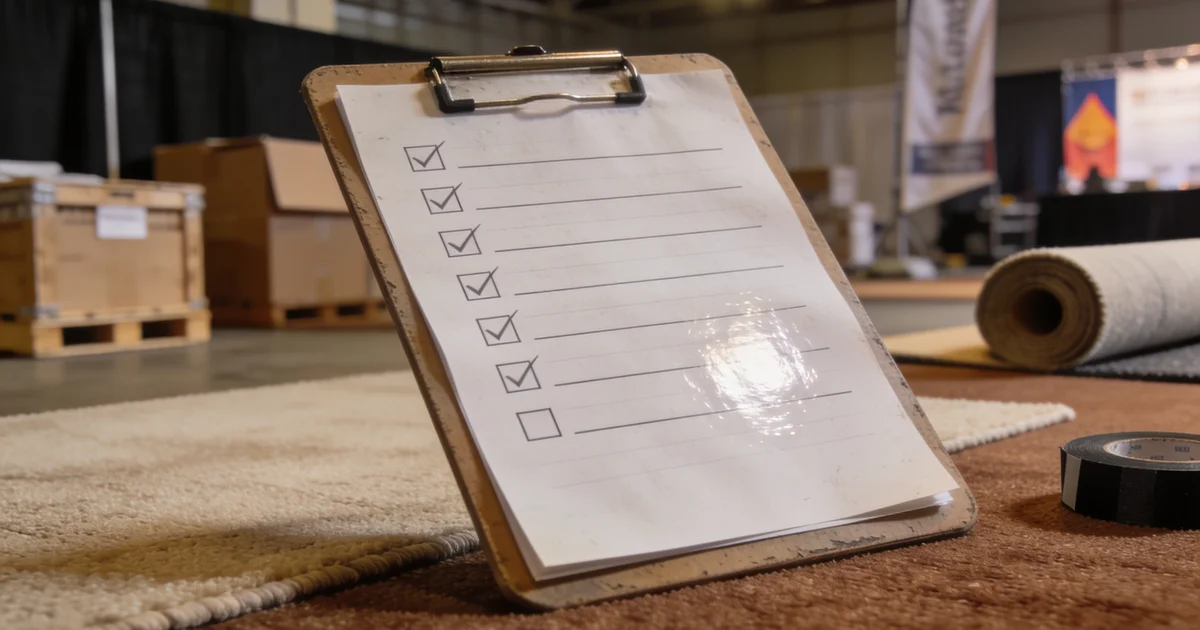
At 90 days confirm tier and outreach lists; at 60 days batch content and publish the landing page; at 30 days launch email and LinkedIn cadence; at 7 days add booth number to every live asset. The phased checkbox timeline in our trade show marketing checklist is the operational version of this tip — paste it into the show plan, do not paraphrase from memory.
8. Assign post-show CRM owners by tier before anyone packs a bag
Hot, warm, and cold tiers need named owners — AE, SDR, marketing nurture — assigned before travel, not in the Monday standup after baggage claim. Blurred ownership is how Thursday hot leads die in a spreadsheet; our follow-up timeline assumes owners exist on day 0.
Booth — tips 9–12
Booth execution converts pre-show intent into capturable conversations. These tips assume selection and pre-show gates are already closed.
9. Keep the layout open — no table barrier between staff and aisle
Staff standing behind a counter forces buyers to initiate; most will not. Open layouts with a clear approach line and demo station at the aisle edge increase stop rate without louder giveaways. I audit booth photos for barrier patterns before show week — the fix is usually furniture placement, not a bigger backdrop.
10. Lead with a headline that states the buyer outcome, not your logo wall
Visitors decide in three seconds whether to stop. A panel that says what changes for their role — cost, risk, speed, compliance — outperforms a ten-foot logo and a tagline about "innovation." Test headline copy against your locked demo hook from tip 6; they should read as the same promise at different lengths.
11. Run a one-hour staff drill on qualification before move-in
Pair each rep with two conversation openers and the four-question qualify script — role, timeline, authority, current vendor — timed to two minutes. Demo reps rehearse the handoff when a visitor is hot vs nurture tier. One hour beats a forty-page PDF nobody reads; qualification detail lives in our two-minute qualify guide.
12. Execute the daily show-week marketing block every hall day
Morning doors-open post with booth number, midday proof moment, AE connection wave, landing-page traffic check, end-of-day CRM notes within thirty minutes. Improvised hotel-lobby posting fills feeds, not calendars. The daily checkbox block in our marketing checklist is the show-week version of this tip.
Capture — tips 13–16
Capture discipline separates pipeline from badge volume. These four tips are non-negotiable on Tier A and Tier B fairs.
13. Qualify every stop in under two minutes before you demo or scan
Role, timeline, authority, current vendor — four questions, two minutes, tier assigned. Demo-heavy conversations with tourists inflate traffic metrics and drain demo rep capacity. The full script and CRM field table are in our qualification playbook; train to it, do not improvise on the floor.
14. Log ICP tier and a conversation hook at scan — not after the show
Blank CRM fields after day three are a pipeline leak no follow-up template fixes. Capture tier, hook in the buyer's words, next step, and show source tag before they leave the booth perimeter. Voice memos in an app beat "we will clean it up Monday" — Monday never comes before the next fire drill.
15. Split qualifier and demo roles so demos are not wasted on cold tiers
Qualifiers filter; demo reps convert hot and warm stops. When one person does both, every walk-by gets a twenty-minute tour and your calendar fills with nurture-tier visitors. Rotate roles by hour on peak days; post a one-page RACI on the back wall so shift changes do not collapse the workflow.
16. Alert hot-tier leads for same-day outreach before the venue closes
Hot stops get a Slack or CRM alert to the owning AE before hall close — not a batch export at midnight. Buyers who engaged deeply on day one are scheduling competitor meetings on day two; same-day personal outreach while the conversation is fresh beats any template on day 4.
Follow-up — tips 17–19
Follow-up is where most exhibitor programs actually fail. These tips rank immediately after selection because a perfect booth with a ten-day CRM queue wastes the same budget as the wrong show.
17. Run the day 0–14 follow-up calendar — not a single blast email
Day 0 hot within four hours, day 1 warm asset, day 2 cold nurture, days 3–7 escalation, day 14 debrief. The tier calendar in our follow-up timeline playbook is the operational version of this tip — assign owners in tip 8, then execute the dates without reinterpretation.
18. Personalize follow-up line one with the booth conversation hook
Generic "great meeting you at the show" emails get generic delete rates. Reference what they asked about — integration, timeline, incumbent vendor — in the subject or first sentence. That hook was captured at scan in tip 14; if it is missing, the follow-up is already handicapped.
19. Escalate silent hot leads within 48 hours — alternate channel, manager visibility
Hot tier with no reply after 48 hours gets a phone call or LinkedIn DM from the AE, not another identical email. Manager visibility on silent hot stops prevents "we sent the template" from counting as follow-up. Pair with the escalation rules in our day 0–14 timeline.
Debrief — tip 20
20. Hold a day 14 debrief on pipeline influenced — then freeze next year's calendar
Score reply rate by tier, meetings booked, pipeline influenced, and cost per qualified meeting against the targets you set in tip 5. Document rebook, downgrade, skip, or attend-only for each fair while memory is fresh — not in Q4 when finance asks why the line item repeats. Teams that skip debrief repeat the same five mistakes our mistake framework documents every season.
Phase quick reference
| Phase | Tips | Pipeline gate |
|---|---|---|
| Selection | 1–4 | Right show, all-in budget, aligned rebook decision |
| Pre-show | 5–8 | Booked meetings, one hook, named CRM owners |
| Booth | 9–12 | Stop rate, trained staff, daily marketing discipline |
| Capture | 13–16 | Qualified tiers, complete CRM fields, hot alerts |
| Follow-up | 17–19 | Day 0–14 calendar, personalized hooks, escalation |
| Debrief | 20 | Pipeline scorecard, calendar freeze for 2027 |
FAQ
What are the most important trade show exhibitor tips?
The highest-impact tips are show selection on ICP fit before booth deposit (tips 1–4), two-minute qualification at every stop (tip 13), and the day 0–14 follow-up calendar with hot-lead SLAs (tips 17–19). Booth graphics and swag rank lower than selection and follow-up discipline — fix the calendar and CRM queue before you upgrade the backdrop.
How do you prepare for a trade show as an exhibitor?
Score the fair on Tier A/B/C fit, shortlist alternatives on ExhibitionsVoice, model all-in spend, set a pre-show meeting quota, lock one demo hook across channels, run the 90/60/30/7 marketing checklist, assign CRM owners before travel, and rehearse the qualification script in a one-hour staff drill. Preparation is phased — start at 90 days, not the week before move-in.
What should exhibitors do before a trade show?
Before move-in: confirm tier and budget, build ICP outreach lists, publish the landing page, launch email and LinkedIn cadence at 30 days, add booth number at 7 days, name post-show CRM owners, and complete the staff qualification drill. Marketing and sales must share the same demo hook — channel-specific rewrites are a pre-show failure mode.
How do you capture leads at a trade show booth?
Qualify every stop in under two minutes, log tier and a conversation hook at scan before the visitor leaves, split qualifier and demo roles, and alert hot-tier leads for same-day outreach before venue close. Badge volume without tier tags and hooks produces a CRM full of cold contacts — not pipeline.
What is the best trade show follow-up strategy?
Run the day 0–14 tier calendar: hot leads within four hours on day 0, warm asset on day 1, cold nurture from day 2, escalation for silent hot within 48 hours, and a day 14 debrief. Personalize line one with the booth conversation hook — generic thank-you emails underperform every time.
How do you measure trade show success after the show?
At day 14, score reply rate by tier, meetings booked, pipeline influenced, and cost per qualified meeting against Tier A/B/C targets. Document rebook, downgrade, skip, or attend-only for each fair. Badge scans and social impressions are activity metrics — pipeline influenced is the success metric.
How these tips are ranked
Tips are ordered by pipeline impact — qualified meetings booked, follow-up reply rate, and pipeline influenced — not aisle traffic, social impressions, or swag volume. Selection and follow-up tips rank highest because no booth execution saves a wrong show or a dead CRM queue.
Selection — tips 1–4
Score tier before deposit, shortlist on ExhibitionsVoice, model all-in spend, and freeze rebook vs test with sales. Cross-links: Tier A/B/C framework, ExhibitionsVoice directory, five biggest mistakes.
Pre-show — tips 5–8
Meeting quota, one demo hook, 90/60/30/7 marketing calendar, CRM owners assigned before travel. Cross-link: marketing checklist.
Booth — tips 9–12
Open layout, outcome headline, one-hour staff drill, daily show-week marketing block.
Capture — tips 13–16
Two-minute qualification, tier + hook at scan, qualifier/demo split, same-day hot alert. Cross-link: qualify lead script.
Follow-up — tips 17–19
Day 0–14 calendar, personalized booth hook in line one, 48-hour escalation for silent hot. Cross-link: follow-up timeline.
Debrief — tip 20
Day 14 pipeline debrief and calendar freeze for next year.
Common exhibitor questions
What are the most important trade show exhibitor tips?
The highest-impact tips are show selection on ICP fit before booth deposit, pre-show meeting quotas by tier, two-minute qualification at every booth stop, and a day 0–14 follow-up calendar with hot-lead SLAs. Booth graphics and swag rank lower than selection and follow-up discipline.
How do you prepare for a trade show as an exhibitor?
Score the fair on Tier A/B/C fit, build ICP outreach lists at 90 days, lock one demo hook across email and LinkedIn, publish a landing page before outreach starts, assign post-show CRM owners before travel, and train staff on the two-minute qualification script.
What should exhibitors do before a trade show?
Before move-in: confirm tier and all-in budget, set a pre-show meeting quota, run the 90/60/30/7 marketing checklist, QA the landing page and UTM tracking, name CRM owners by tier, and rehearse qualification and demo role splits in a one-hour staff drill.
How do you capture leads at a trade show booth?
Qualify every stop in under two minutes, log ICP tier and a conversation hook at scan — not after the show — split qualifier and demo roles so demos are not wasted on tourists, and alert hot-tier leads for same-day outreach before the venue closes.
What is the best trade show follow-up strategy?
Run a day 0–14 tier calendar: hot leads within four hours on day 0, warm asset on day 1, cold nurture from day 2, escalation for silent hot within 48 hours, and a day 14 debrief on pipeline influenced. Personalize email line one with the booth conversation hook.
How do you measure trade show success after the show?
At day 14 debrief, score reply rate by tier, meetings booked, pipeline influenced, and cost per qualified meeting against your Tier A/B/C targets. Document skip and rebook decisions for next year's calendar — not just total badge scans or social impressions.
Editorial standards & corrections
This guide is maintained by the ExhibitionsVoice editorial team. We cross-check dates, venues, and organizer names against official sources before listing events. Spot an error? Use our contact form with the event URL and corrected details — every correction request is read by editorial.
Read more: About ExhibitionsVoice · FAQs · All exhibitor guides
Related articles
Oil and gas trade shows 2026: energy calendar and how to pick
Oil and gas trade shows for 2026 — ADIPEC, WETEX, and offshore energy fairs we score for NOC, IOC, and energy-tech exhibitors.
CPHI India 2026 exhibitor guide: Delhi pharma ingredients floor
CPHI India 2026 exhibitor guide for 23-25 November at IICC Yashobhoomi, New Delhi — API, CDMO, and packaging teams scoring South Asia's ingredients floor.
Fintech trade shows 2026: payments calendar and how to pick
Fintech and payments trade shows for 2026 — Money20/20 USA, Sibos, and how banks and vendors pick Tier A/B/C money-ecosystem floors.
ADIPEC 2026 exhibitor guide: Abu Dhabi energy floor
ADIPEC 2026 exhibitor guide for 2-5 November at ADNEC Centre Abu Dhabi — who should exhibit, hall logistics, and how we score the energy floor.